
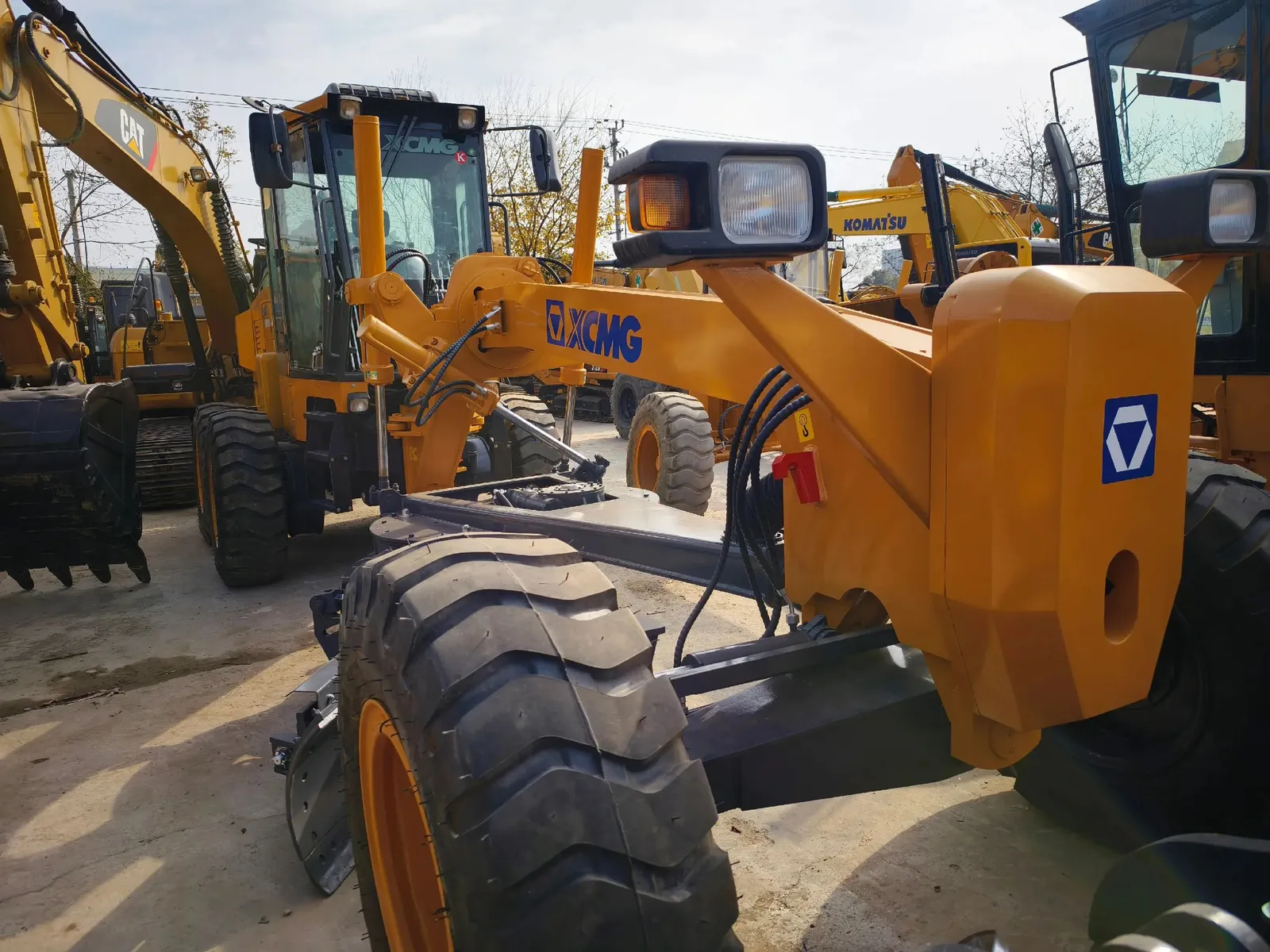
 Used models
XCMG / Motor grader
Used equipment / REPRESENTATIVE MODELS
See representative motor grader models, equipment photos and reference technical data. Tell us your budget and destination port so we can propose suitable equipment.
USED / MODEL SELECTION
Tell us the expected year, operating conditions and budget; we will match specific machines and provide corresponding photos and inspection documents.
Photos and specifications can be used to compare models; the final equipment, configuration and quotation are confirmed item by item after you contact us.
BEFORE YOU BUY / BUYING GUIDE
Select a used grader based on road width, surface material and the grading task; the quoted price also reflects year, hours and the actual condition of the engine, transmission and blade mechanism. This page uses the XCMG GR1803 as a starting point to distinguish spec-sheet figures from capabilities you must confirm by test. For contract work, municipal maintenance or farm road upkeep, send site conditions together with the inspection information below when you request a quote.
| Model | Operating weight | Rated power | Engine | Reference FOB price |
|---|---|---|---|---|
| XCMG GR1803 Motor Grader | ~15,400 – 16,000 kg | 132 kW / 180 HP | Cummins 6BT / QSB | US$28,800 |
The XCMG GR1803 shown in the table is a representative used unit supplied directly by YUYAN; its data come from this site's product card and spec sheet. Web images and specifications are for model reference; once a specific unit is offered, verify its year, hours and condition using the single-unit photos, operating video and written description provided with the quotation.
The GR1803 has a reference operating weight of ~15,400 – 16,000 kg and a rated power of 132 kW / 180 HP. For repairing gravel roads, shaping berm slopes or leveling farm tracks, specify the width, material compaction and slope conditions. Weight and power help screen models but do not alone determine grading performance; also confirm tire traction, blade attitude and whether there is enough turning space on site.
Don’t only film the blade lift. Ask the operator to continuously show blade rotation, side shift and tilt, and watch for vibration, unusual noise or delayed response under load. Inspect closely the circle teeth, drawbar connection points, blade guides and frame articulation for wear, cracks or repair welds. Rental companies should include potential repairs for these areas in downtime and maintenance budgets.
The spec lists the engine as Cummins 6BT / QSB; that description alone does not confirm which version a specific used machine has. Verify the engine nameplate and serial number before identifying filters or other service parts. On cold start observe smoke and idle; with the machine hot check cylinders, hose fittings and driveline for leaks, and test travel and gear changes. Cross-check the hour‑meter reading with pedal, tire and pin wear and with maintenance records.
The ~6,200 mm in the spec is the wheelbase, not the transport length; do not take operating weight as the packed shipping mass. Define the shipment by the unit’s measured L×W×H, its shipping weight and the blade’s stowed position. If disassembly is required, document the parts to be removed, identification, protection and reassembly responsibility. Also state destination unloading conditions and the subsequent road route before confirming freight.
GR1803 data list a maximum blade lift height of ~450 mm and a maximum cutting depth of ~500 mm. These are reference movement ranges, not guarantees of results on every surface. To form road crown or trim ditches, also evaluate blade angle, linkage clearances and performance with material during a test run; do not treat the maximums as a promised on-site capability.
A new cutting edge and a clean appearance do not reveal actual wear or condition of the circle, hinge pins or drivetrain. Review the unit video and maintenance records. If key clearances or leaks cannot be judged remotely, you may arrange an on-site or third-party inspection; scope, timing and cost of that inspection must be confirmed separately.
First compare written FOB offers for the same unit, condition description and loading port. Then calculate sea freight, insurance, destination charges, import duties and inland transport separately. Ask explicitly whether disassembly, reassembly and protection are included; the page reference price does not replace a contractual quotation for the specific machine.
Have your local customs broker confirm import feasibility for the used grader, required declaration documents and any cleaning requirements, and provide the document list to YUYAN. YUYAN can assist with paperwork, customs clearance and local import requirements, but specific requirements are subject to confirmation by your broker; web data alone is not sufficient to complete the process.
NEXT STEP / Next step
Provide the target model, year, budget and destination port; after matching we will provide photos, operating data and a quotation for the matched unit.
Inquire about this equipment ↗View verification methods ↗